Your HVAC system breaks down. You call for a repair. It gets fixed. Life goes on.
Then it breaks again.
And again.
At some point, you start wondering: Are we still fixing this thing, or are we just financially supporting it through its retirement years?
It’s a question almost every homeowner eventually has to ask. HVAC systems are built to last, and plenty of problems are absolutely worth repairing. But there comes a point when continuing to pour money into an older system may not make as much sense as replacing it.
So, how do you know when to repair or replace your HVAC system?
Start With the Age of Your HVAC System
Age isn’t everything, but it’s a pretty important part of the conversation.
According to ENERGY STAR, homeowners should consider replacement when an air conditioner or heat pump is more than 10 years old or a furnace is more than 15 years old — particularly if the equipment is also having performance problems.
That doesn’t mean your 11-year-old air conditioner needs to be immediately escorted from the premises.
A well-maintained older system that still runs efficiently and hasn’t needed major repairs may have plenty of life left. But once your equipment reaches that age range, expensive repairs deserve a little more thought.
Putting $500 into a relatively young, reliable system is one thing. Putting money into a much older system that already has a history of problems is another.
You’re Becoming a Little Too Familiar With Your HVAC Technician
We love seeing our customers. We would also prefer that you not have to call us every few months.
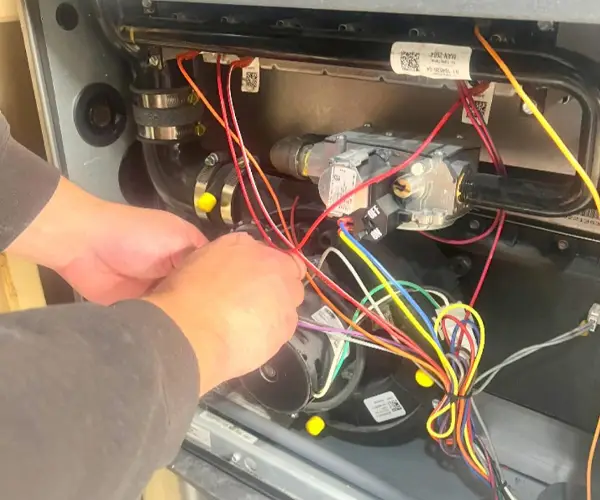
One repair doesn’t necessarily mean your HVAC system is on its last leg. Parts wear out. Capacitors fail. Motors have bad days. Things happen.
But if repairs are becoming a regular event, zoom out and look at the bigger picture. Think about how much you’ve spent on the system over the past year or two. If you keep repairing one component only for another one to fail shortly after, those smaller bills can start adding up surprisingly fast.
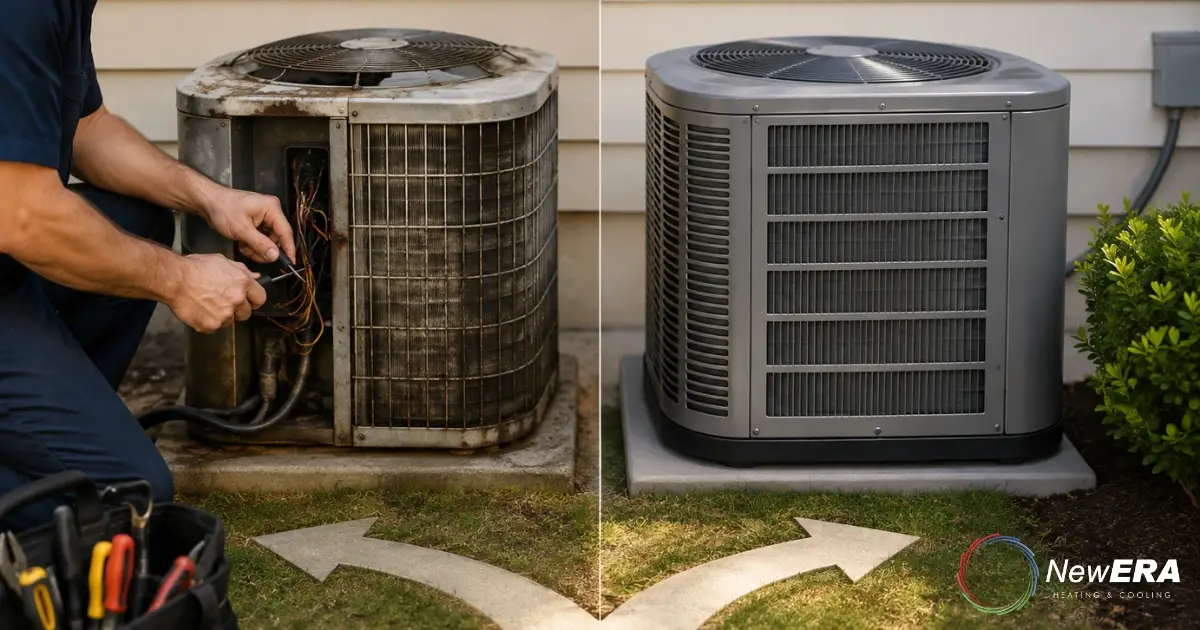
At some point, putting that money toward a new system may make more financial sense than continuing to repair the old one.
Your Energy Bills Keep Going Up
If your utility bill suddenly jumps, your HVAC system isn’t automatically guilty. Missouri weather alone can make one month look dramatically different from another.
But steadily increasing energy costs can be a sign that an older HVAC system isn’t operating as efficiently as it once did.
As equipment ages, it may have to run longer or work harder to maintain the same temperature in your home. That means you’re paying more every month while potentially getting less comfort in return.
If your system seems to run constantly and your utility bill makes you say words we probably shouldn’t print on the company blog, it’s worth having the equipment evaluated.

Your House Still Isn’t Comfortable
Your HVAC system has one main assignment: keep your house comfortable.
If it is running constantly but certain rooms are still hot, cold, humid, or generally unpleasant, something isn’t right.
Sometimes the HVAC equipment isn’t actually the culprit. Ductwork problems, air leaks, insulation, airflow issues, or even an incorrectly sized system can create comfort problems.
That’s why we don’t recommend diagnosing your HVAC system based entirely on vibes. A technician can look at the whole system and determine whether you need a repair, an adjustment somewhere else in the home, or whether the equipment itself is simply struggling to keep up.
The Repair Is Expensive, and the System Is Old
This is where the repair-versus-replace conversation becomes especially important.
If your system is relatively new and otherwise in good shape, repairing a failed component can be an easy decision.
If your system is well into its teenage years, has already required several repairs, and now needs another major one? That deserves a conversation.
Before approving an expensive repair, ask what condition the rest of the system is in. Fixing today’s problem won’t necessarily prevent another aging component from failing next month.
You’re not just deciding whether the current repair will work. You’re deciding whether the entire system is still worth investing in.
Don’t Forget About Efficiency and Comfort
Replacement is obviously a bigger upfront expense than most repairs, but the price of the new equipment isn’t the only number that matters.
Newer HVAC systems can offer better energy efficiency, improved temperature control, quieter operation, and newer technology that may not have been available when your current equipment was installed.
That doesn’t mean everyone with an older system needs an upgrade.
But when you’re already facing a significant repair, it makes sense to compare both options instead of automatically choosing whichever costs less today.
So… Should You Repair or Replace?
The answer depends on the system.
Consider its:
- Age
- Repair history
- Current repair cost
- Overall condition
- Energy efficiency
- Ability to keep your home comfortable
Sometimes a repair is absolutely the smartest choice. Other times, another repair is just delaying a replacement you’ll probably need soon anyway.
At New Era Heating & Air Conditioning, we’d rather help you understand your options than push you toward one answer. We service all major brands and can evaluate your system, explain what’s going on, and give you clear options for repair or replacement.
If your HVAC system is starting to feel less like an appliance and more like a recurring monthly subscription, give New Era a call.
We’ll help you figure out the next step — and get your house comfortable again.