Spring and summer in Missouri are great. Warmer weather, longer days, and everything starts to feel alive again. Also… thunderstorms, high winds, power outages, and the occasional “is that a rotation?” moment. The good news? We’ve got all the information on how to protect your HVAC from storms.
While most people are thinking about patio furniture and storm prep, your unit is sitting outside, exposed to all of it. And when severe weather hits, it is one of the more vulnerable (and expensive) pieces of equipment around your home.

Let’s Start with the Obvious: Power Surges Are Not Your System’s Friend
When storms roll through, power outages and sudden surges are pretty common. And while your lights flickering might just be annoying, your HVAC system doesn’t always bounce back so easily.
Power surges can damage:
- Compressors
- Circuit boards
- Electrical components
Basically, the parts you don’t want to replace.
One of the simplest ways to protect your HVAC from storms is by installing a surge protector specifically for your HVAC unit. It acts as a buffer between your system and those sudden spikes in electricity.
Think of it as giving your AC a little insurance policy against chaotic weather.
If the Power Goes Out… Don’t Rush to Turn Everything Back On
We get it. The power comes back, and the first instinct is to crank the AC and reclaim your comfort immediately.
But your HVAC system needs a minute.
When power is restored, there can be fluctuations or short cycling that put extra stress on your system. Turning it on too quickly can increase the risk of damage, especially after a surge.
A better move:
- Wait a few minutes before restarting your system
- Make sure the power is stable
- Then bring things back online gradually
It is a small step that can prevent a much bigger issue.
Debris Is a Bigger Problem Than You Think
High winds, storms, and even heavy rain can send all kinds of debris flying—leaves, sticks, dirt, and who knows what else.

Your outdoor unit is built to handle the elements, but it is not designed to be buried in yard debris.
After a storm, take a quick walk outside and check:
- Is anything blocking airflow?
- Are leaves or branches stuck in or around the unit?
- Does anything look bent or damaged?
Even partial blockages can make your system work harder than it should, which leads to inefficiency and wear over time. Something as simple as a clean filter can make a big difference in how your system handles stress—especially during extreme weather. If it’s been a while, this guide breaks it down.
Flooding and Standing Water: A Different Kind of Risk
If your outdoor unit sits in a low spot, heavy rain can create standing water around it. While these systems are built for outdoor conditions, prolonged exposure to water, especially flooding, can cause serious damage.
If your unit has been exposed to flooding:
- Do not turn it on right away
- Have it inspected first
Water and electrical components are not a great combination, and it is better to be cautious than deal with preventable damage.
A Quick Pre-Storm Checklist for your HVAC System (Because Timing Matters)
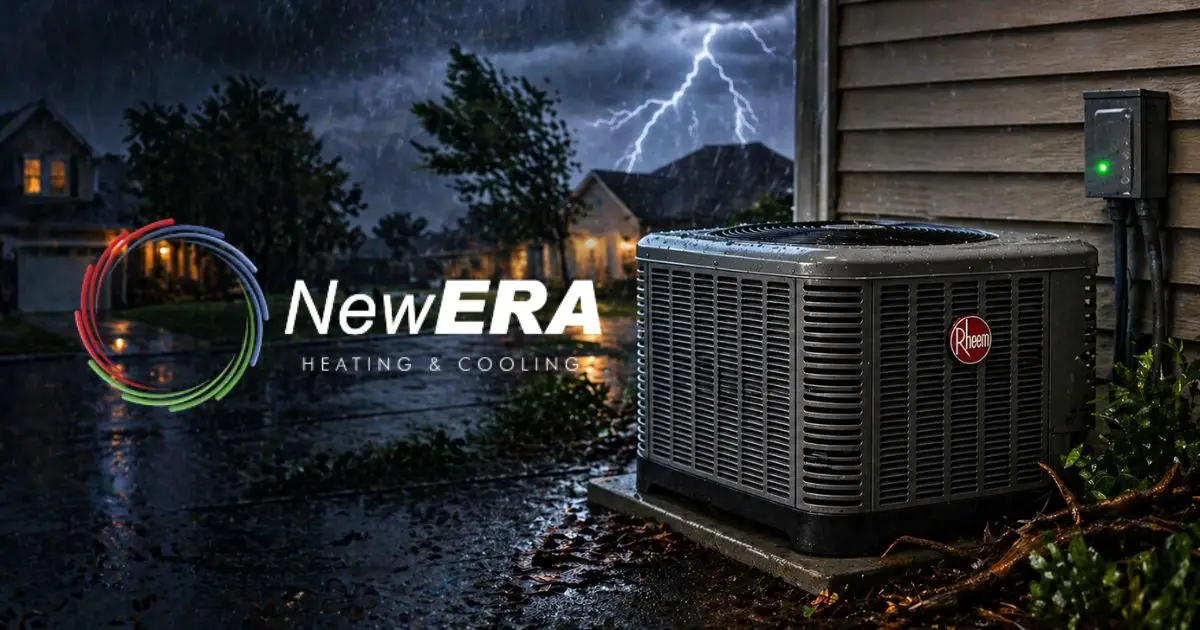
If you know severe weather is on the way, below are a few quick things you can do ahead of time to protect your HVAC from storms. In fact, manufacturers like Rheem recommend taking simple preventative steps to protect your system before storms hit.
- Secure or move loose outdoor items (patio furniture, yard decor, etc.)
- Trim back nearby branches if possible
- Clear debris from around your unit
- Make sure your system is shut off if conditions get extreme
None of this takes long, but it can make a big difference when the wind picks up.

New Era Heating & Cooling Can Help Protect Your HVAC from Storms
Missouri weather is going to do what Missouri weather does. You can’t control the storms, but you can make sure your HVAC system is ready for them.
If you want a little extra peace of mind heading into storm season, having your system inspected is a smart move. It gives you a chance to catch potential issues early and make sure everything is running the way it should.
If you’re looking for a way to save, you can get scheduled for our Annual Service Agreement where we come out 2 times a year, in the fall and spring, so you can head into the seasons knowing your system is prepared—no matter what the forecast decides to do.